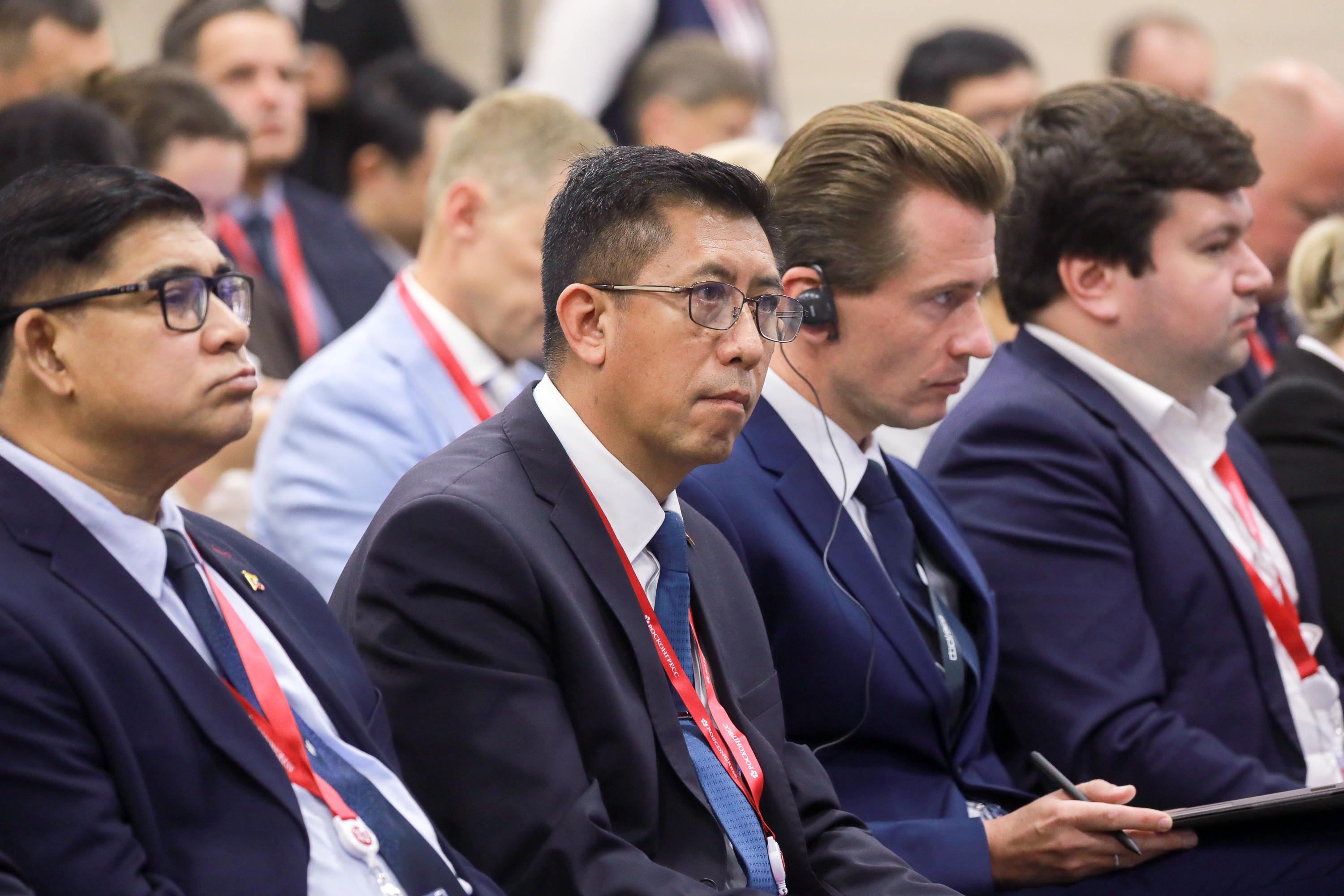
EEF: Russia–ASEAN Business Dialogue
02 september 2026
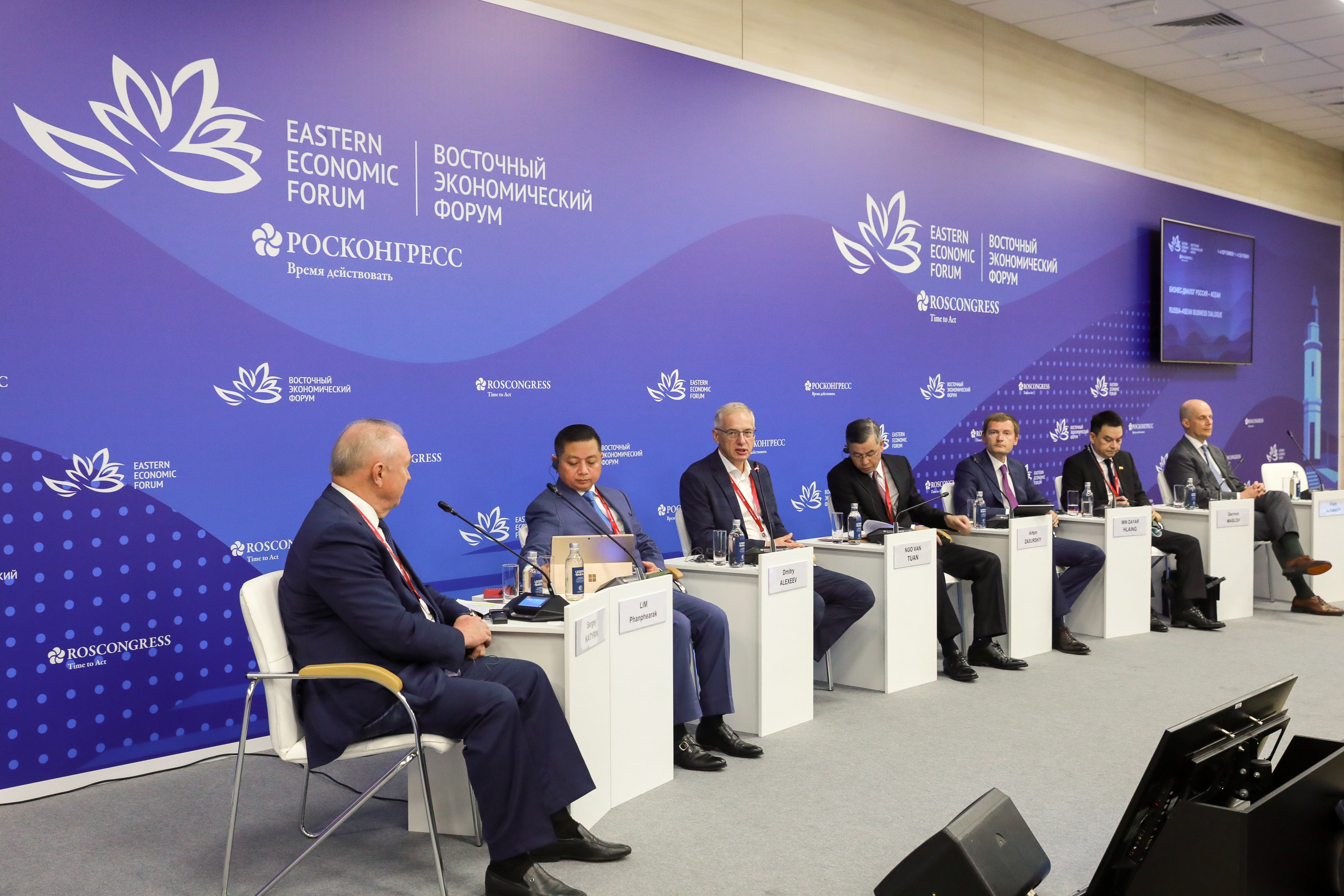
On September 2, 2026, the Russia–ASEAN Business Dialogue was held in Vladivostok on the sidelines of the Eastern Economic Forum.The event was organized by the Russia-ASEAN Business Council and the Russian Chamber of Commerce and Industry.
The session was moderated by Sergey Katyrin, President of the Chamber of Commerce and Industry of the Russian Federation, who noted in his opening remarks that this year marks the 35th anniversary of Russia–ASEAN cooperation.
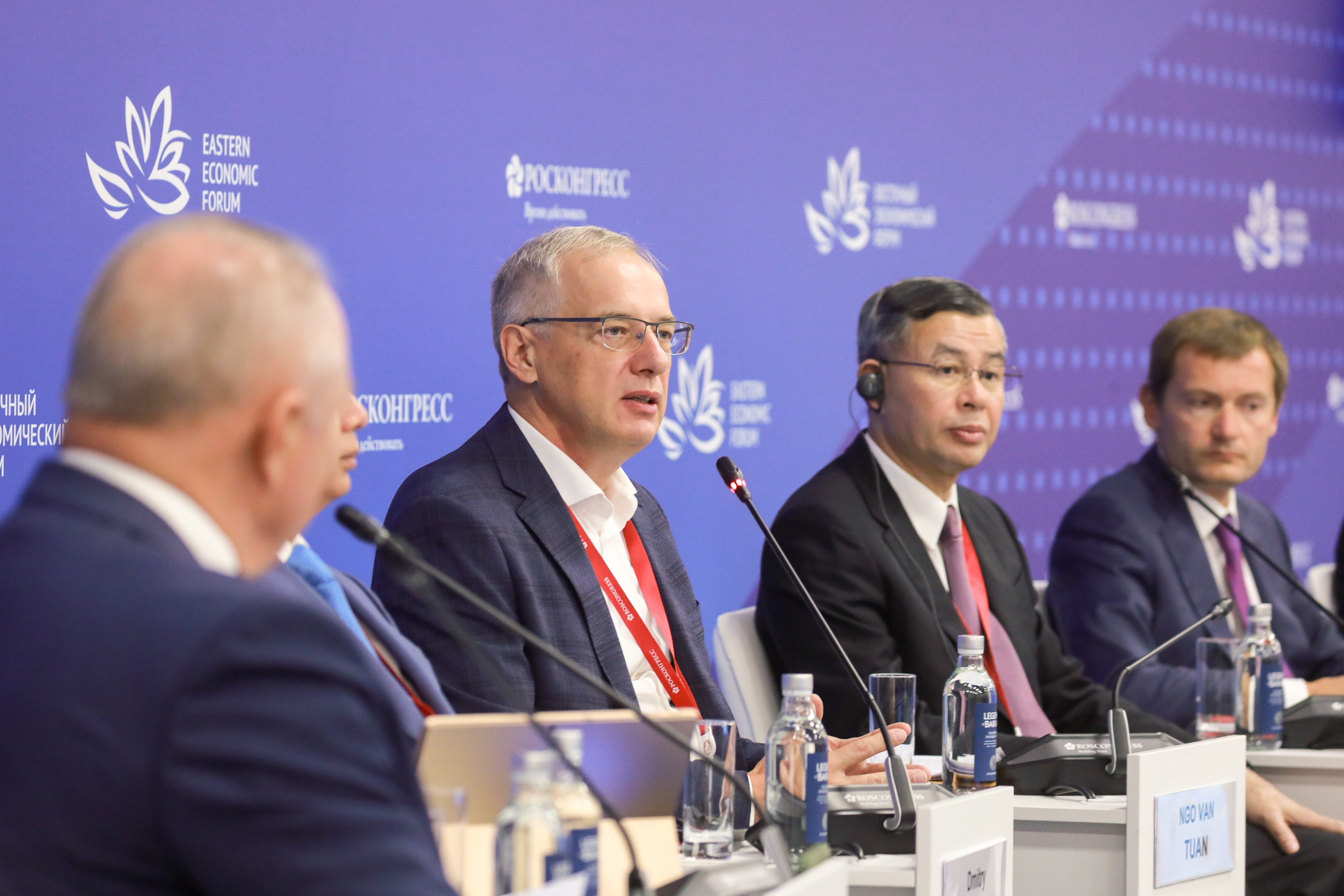
Ngo Van Tuan, Minister of Finance of the Socialist Republic of Vietnam, emphasized that Vietnam, being the first ASEAN country to sign a free trade agreement with the Eurasian Economic Union, sees significant potential for further deepening cooperation. The Minister outlined five priority areas: supply chain development, joint investments in processing industries, high technologies, energy, logistics, and high-tech agriculture. He also reported that Vietnam’s GDP reached approximately $514 billion in 2025, while foreign trade turnover exceeded $930 billion. Bilateral trade between Vietnam and Russia last year amounted to $4.7 billion, accounting for roughly one quarter of Russia’s total trade with ASEAN countries.
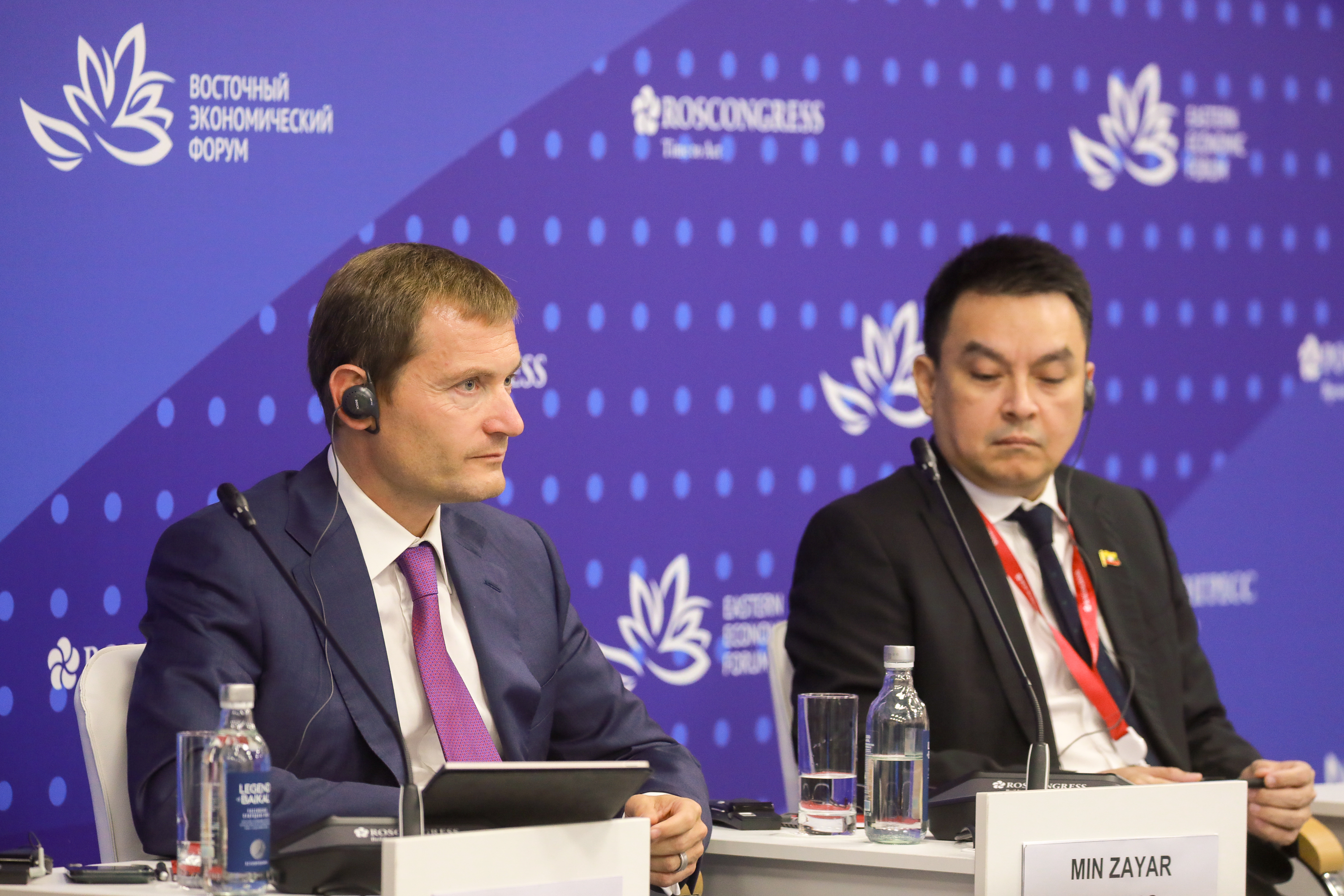
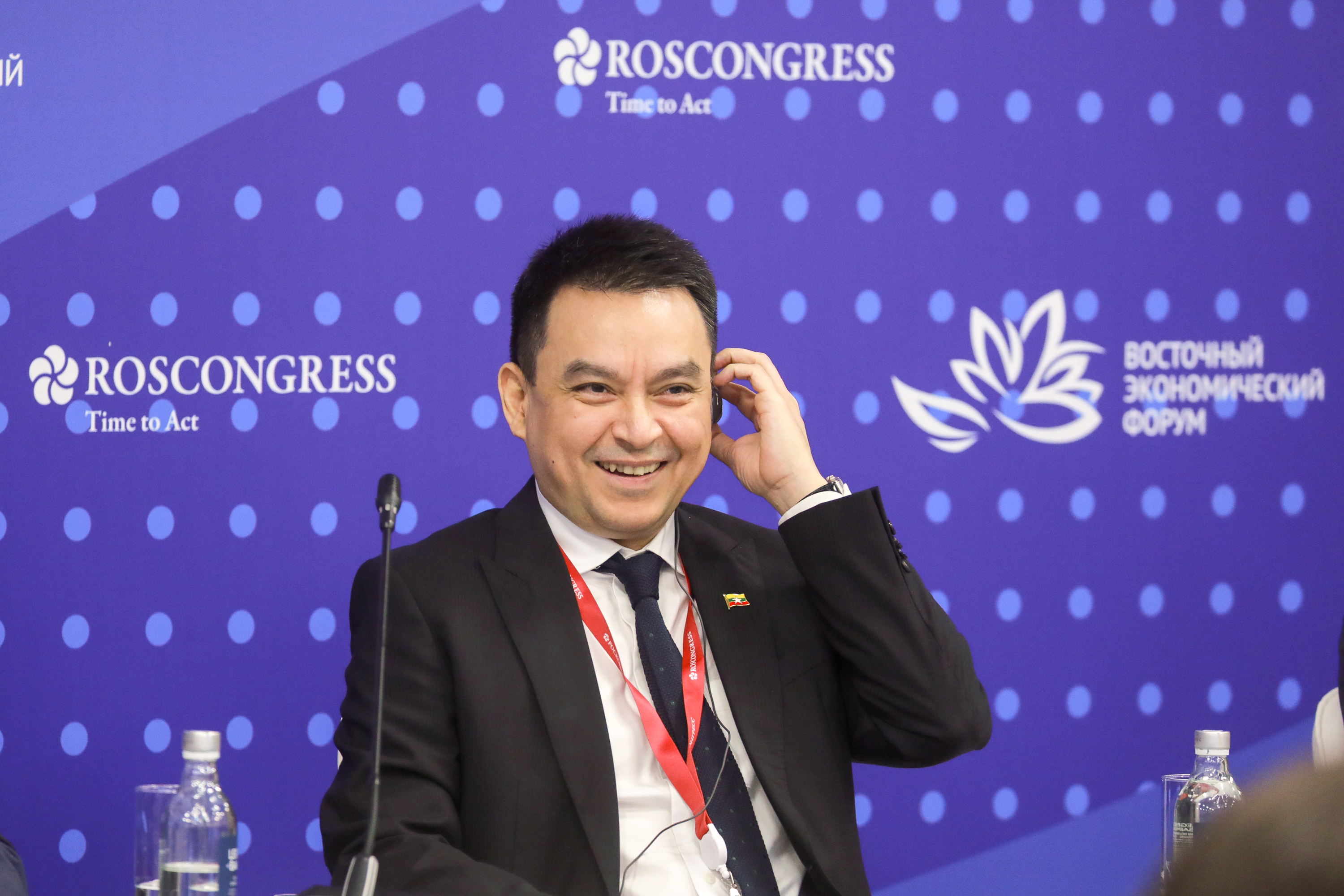
Min Zayar Hlaing, Deputy Minister of Digital Development and Communication of the Republic of the Union of Myanmar, spoke about the establishment of a new dedicated ministry in his country and the development of a digital transformation strategy. He highlighted three key priorities: digital government, digital economy (transition from cash payments to online payments), and digital society (improving digital literacy). Myanmar is already implementing a pilot “cybercity” project jointly with Russian partners. The Deputy Minister stressed that his country regards Russia as a reliable partner in cybersecurity, telecommunications infrastructure, and smart cities, and is ready to engage in five areas of cooperation, including technological innovation and capacity building.
Lim Phanphearak, Deputy State Secretary of the Ministry of Commerce of the Kingdom of Cambodia, noted the importance of the adoption of the Russia–ASEAN Action Plan for 2026–2030, approved at the Summit in Kazan, and emphasized the importance of transport connectivity, food security, the digital economy, and energy infrastructure. Cambodia, he said, is ready for joint projects and sees shared cultural heritage with Russia.
Dmitry Alexeev, Founder, Co-Owner and President of DNS Group, stressed that the Eastern Economic Forum has become a regular platform, and cooperation with ASEAN is gaining particular relevance. He sees significant potential in the development of smart cities – digital twins, video surveillance and security systems, as well as integration of logistics systems and public transport development. Alexeev noted that Russian IT expertise, including mapping and networking technologies, could be scaled across the region.
Artem Zasurskiy, Vice President for International Cooperation at Sistema, stated that ASEAN countries have become a priority for the corporation and a “positive discovery” in recent years. Over the past decade, Sistema has implemented more than 25 “Safe City” projects in various countries, including Brazil and Singapore, with pilots underway in Vietnam. Facial and silhouette recognition systems have proven their effectiveness – for example, in Brazil, they helped locate around 3,000 wanted criminals within six months. Zasurskiy also highlighted cybersecurity (offering sovereign solutions to friendly countries), unmanned technologies, space services (satellite launches and student training), and hydrogen energy – a pilot project with the Vietnam Academy of Science and Technology is already underway.
German Maslov, Deputy General Director of the Liner and Logistic Division of FESCO, spoke about the development of logistics routes. FESCO, being Russia’s largest container carrier, has launched a direct shipping line from Vietnam (Haiphong and Ho Chi Minh City ports) to Vladivostok and St. Petersburg, as well as intra regional services between ASEAN countries. The company uses Vietnam as a logistics hub for cargo from Indonesia, Malaysia, and Thailand. FESCO also provides cargo transportation services from Cambodia and Myanmar, building multimodal bridges between Russia and Southeast Asia.
Nikita Kondratyev, Director of the Department of Multilateral Economic Cooperation and Special Projects of the Ministry of Economic Development of the Russian Federation, cited positive trade dynamics: in the first half of 2026, Russia’s trade turnover with ASEAN countries grew by approximately 10%, with growth of 32% with Thailand, 15% with Vietnam, and 6% with the Philippines. He noted that significant efforts are underway to remove tariff and non tariff barriers – in particular, access for Russian meat and dairy products to regional markets has been secured, and halal certification is being actively promoted. The ratification of the free trade agreement with Indonesia is nearing completion. Kondratyev also announced that a new Russia–ASEAN cooperation program until 2035 will be approved in late September, with an ambitious target of achieving $45 billion in trade turnover.
Georgiy Chikov, Chief Managing Director of VEB.RF, announced the creation, following the instruction of the President of Russia, of a unified investor support system, InvestRussia – a one stop shop for project support from ideation to launch. The system is available to both Russian and foreign investors, including those from ASEAN countries, and helps reduce bureaucratic barriers. VEB.RF has already financed the construction of a thermal power plant in Vietnam and supplied Russian aircraft. The Corporation is interested in exchanging experience with investment agencies of the Association countries within the framework of the InvestASEAN initiative.
Elina Sidorenko, General Director of ANO “Platform for Working with Entrepreneurs’ Appeals,” Member of the Council under the President of the Russian Federation for the Development of Civil Society and Human Rights, addressed the topic of payment systems. She noted that the crisis of the traditional dollar based system and sanctions require searching for alternatives. According to her, ASEAN countries are successfully developing integration through QR codes, bypassing complex interbank chains. Sidorenko proposed three strategies for Russia: creating special payment bridges, integrating into ASEAN’s existing QR system, and using tokenized assets (with a caveat about risks related to intervention by international regulators).
During the dialogue, key areas of further cooperation were identified: trade and investment; digital transformation and cybersecurity; logistics and infrastructure; energy (including nuclear and hydrogen); high technologies (unmanned systems, space, artificial intelligence); and payment solutions. Participants agreed that geographic distance, differences in borrowing costs, and regulatory disparities remain barriers. However, specific initiatives – such as InvestRussia, new FESCO logistics services, pilot smart city projects, and digitalization of public services – are already creating a practical foundation for overcoming them.
The Business Dialogue confirmed the mutual commitment of the parties to deepening partnership and shifting from trade to joint investments and technological cooperation for the benefit of sustainable regional development and the well being of the peoples of Russia and ASEAN member states.